
Array Languages #4: X_eTaL-extensions, Extending the Machine
1756 words • 9 min read • Abstract

| Resource | Link |
|---|---|
| The repo | softwarewrighter/X_eTaL-extensions — eleven extensions, the ABI, the loader, the facades |
| The demos | the demos, recorded — each with how to run it yourself |
| Reference | the docs — every facade, shared library and demo, cross-referenced with its types |
| Prior post | Array Languages #3: X_eTaL-libraries |
| Comments | Discord |
The boundary
An extension is a small Rust shared library. It exports one C-ABI descriptor: its name, its version, and a table of typed functions. A loader validates the descriptor and calls the functions, and an error or a panic inside one comes back as an error, not a crash. On the X_eTaL side, a facade library gives each native function an X_eTaL name and type. Writing an extension is plain Rust, with the boundary generated:
use xetal_ext_sdk::{OwnedError, Value, text};

fn shout(args: &[Value]) -> Result<Value, OwnedError> {
    Ok(Value::Text(text(&args[0])?.to_uppercase()))
}

xetal_ext_sdk::xetal_extension! {
    name: "hello",
    version: env!("CARGO_PKG_VERSION"),
    functions: {
        shout: 1, "Char -> Char", "The text in upper case.";
    }
}
The facade is where the three meanings of Extensible meet. Every facade function is one line, a call to a binding macro, Ffi.xtlm, that writes the function from its signature. The macros of the previous post write the plumbing for the native code of this one:
"ffi:" u̲se< "Ffi"
"s_hout : text -> text"        ᶠᶠⁱb̲ind< "hello/shout"
"s_um : float -> float"        ᶠᶠⁱb̲ind< "hello/sum"
and a program imports the facade like any library:
"hx:" u̲se< "Hello"
ʰˣs̲hout "x_etal"                       ⍝ X_ETAL, upper-cased in Rust
ʰˣs̲um (r̲ange 10) '× t̲able r̲ange 10    ⍝ 3025.0: a 10 by 10 array, summed in Rust
X_eTaL can’t call native code by itself yet. That hook is filed with the language and planned there, so for now these programs run under a bridge host, xetal-x: X_eTaL’s own command line, every subcommand the same, plus extensions. Arguments and results cross as text. When the hook lands, the facades change and the programs don’t.
Crossing as text has a cost, and the clock extension measures it. On a laptop the bridge makes about 220,000 calls a second and carries about 2.6 million numbers a second out and back. A sum of 100,000 numbers takes about as long in X_eTaL as it does in Rust over the bridge, because most of the time goes to formatting the numbers as text. So the bridge pays off for work that is heavy per element, such as an SVD, an image codec or a database query, and not for a sum.
Eleven extensions, by what they reach
Release 1 was Hello, Clock and SQLite. There are now eleven, and between them they reach most of what a program needs from outside an interpreter:
| Area | Extension | What it gives X_eTaL | Built on |
|---|---|---|---|
| database | SQLite | execute and query SQLite files; import CSV | rusqlite |
| audio | Audio | decode Ogg Vorbis, MP3 and WAV; play files or arrays; read what plays as arrays | symphonia, cpal |
| graphics | Canvas | a native window that shows arrays as pixels and sends keys and clicks back | winit, softbuffer |
| 3D | Scene | lines, points and shaded quads in a native window, a camera, a depth buffer, fog, light | winit, softbuffer |
| networking | Web | an HTTP server on loopback: the program takes each request and replies | axum, tokio |
| networking | HTTP | bounded downloads, with limits on size, time and redirects | ureq |
| images | Image | PNG and JPEG to and from arrays; resizing | image |
| math | Linalg | solve, inverse, determinant, least squares, eigenvalues, SVD | nalgebra |
| system | Clock | wall-clock and monotonic time | std |
| system | Digest | SHA-256 and CRC-32 of text and files | sha2, crc32fast |
| proof | Hello | the smallest working boundary | — |
Each one has its facade, its Rust tests and golden tests of every facade function, demo and error message. The 3D renderer is a CPU rasterizer written in Rust, drawing into a native window, with no GPU API. Regular expressions are the one extension still on the roadmap.
The demos
The pattern in the demos is the same each time: the extension does what it is for, and X_eTaL does the arithmetic on whole arrays. Twelve of them are below, and each tile links to its recording and how to run it.
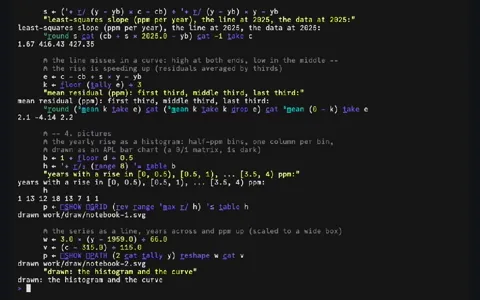 data notebook
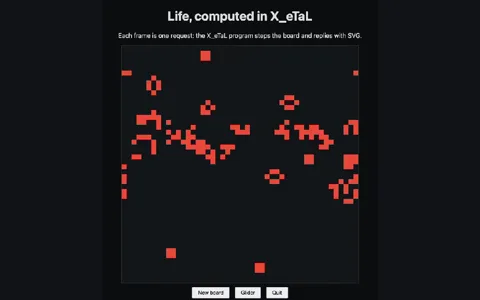 Life on the web
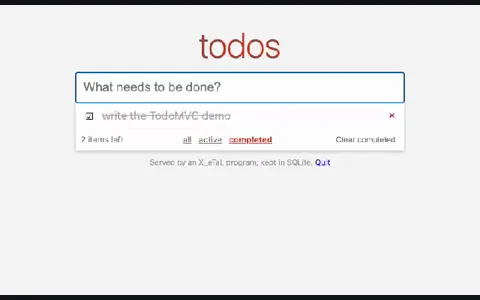 TodoMVC
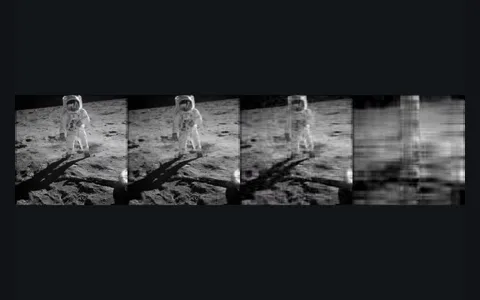 photo lab
 earthquakes
 visualizer
 synthesizer
 oscilloscope
 Life in a window
 voxel light
 Gem Hunt
 cube solver
-
Database: the data notebook. The Mauna Loa CO2 record goes into SQLite as a CSV. SQL selects and groups, and X_eTaL computes the yearly rise, a least-squares line and its residuals, and a histogram:
"sq:" u̲se< "Sqlite" db sq:i̲mport "co2=demos/data/co2-mlo-annual.csv" m ← db sq:n̲ums "select year, mean from co2 order by year" c ← 2 s̲elect₂ m d ← (1 d̲rop c) − -1 d̲rop c - Networking: X_eTaL on the web. One page is Life, stepped by the X_eTaL program once per request and drawn as SVG. Another is TodoMVC with plain HTML forms, its items kept in SQLite, the filter turned into SQL and the page written by X_eTaL.
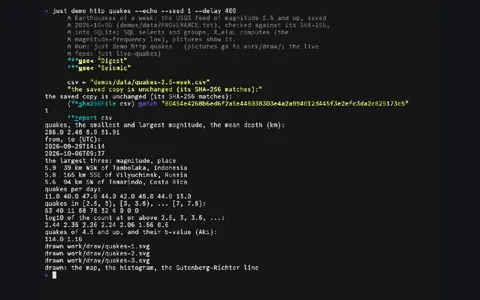
- Networking: an earthquake report. A week of the USGS earthquake feed is checked against its SHA-256 and loaded into SQLite. X_eTaL computes the Gutenberg-Richter b-value, 1.16 from the 114 quakes of magnitude 4.5 and up, and draws a world map of where they were. A twin of the demo reads the live feed.
- Images and math: the photo lab. A photo of Buzz Aldrin on the Moon is an array. Blur, sharpen and edges are rotations of it summed, the idiom of Life again. Sepia toning is one inner product with a 3 by 3 matrix. The SVD rebuilds it from its largest 5, 20 and 50 parts, keeping 94%, 98% and 99% of its energy.
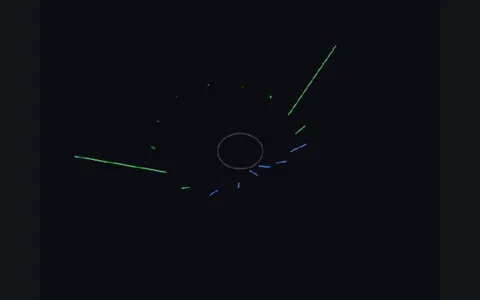
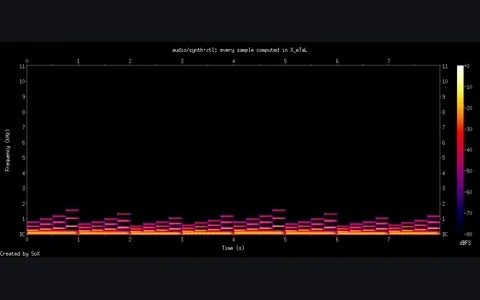
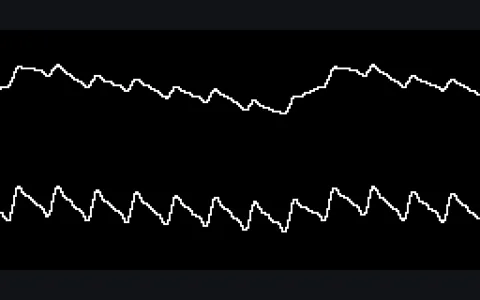
- Audio: a visualizer, a synthesizer and an oscilloscope. The visualizer reads the samples under the playhead and turns them into a spectrum with one inner product each against cosine and sine tables. The synthesizer runs it the other way: X_eTaL computes every sample of eight bars of music, chords as a table of sines, and the extension plays each bar while the next is made. The oscilloscope draws the waveform as it plays, triggered like a real scope.
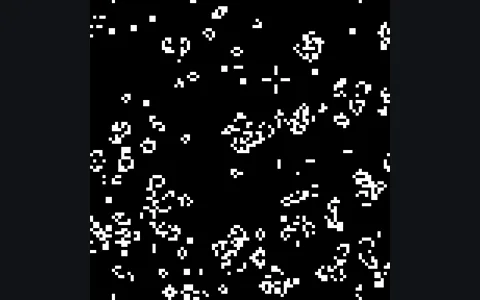
- Graphics: Life in a window. The first window demo, arrays shown as pixels.
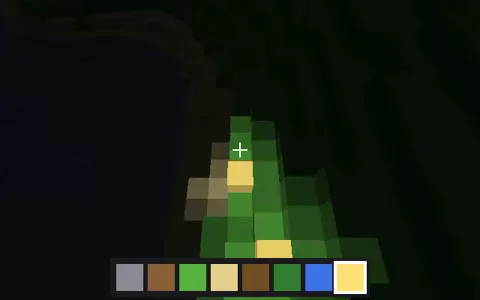
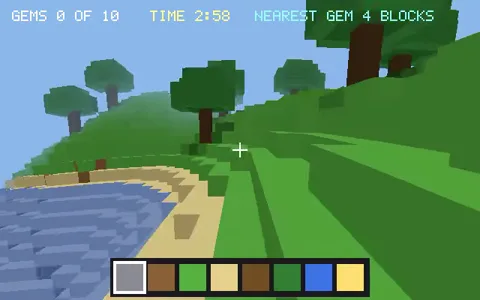
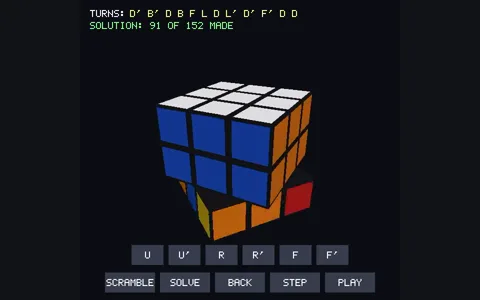
- 3D: the voxel world and the cube. A world of blocks you can walk, fly, dig, flood and light, and a game, Gem Hunt, on top. They have a post of their own. So does the voxel Rubik’s cube, which the Eigencube solver now drives.
Why the types make this safe
The static types are not a safety feature bolted onto APL. Array-language terseness packs assumptions about rank, element type and arity into a short expression. Inference lets the program stay terse while the compiler answers the question can these pieces actually compose? — without annotations on every line. At this boundary the types do one more job. Each native function’s X_eTaL type is written once, in its facade line, so the type checker sees a call to Rust the same way it sees a call to X_eTaL, and the golden tests pin every facade’s types. The same types keep the rest of the extensibility from turning chaotic: libraries compose through them, and macro expansions are checked by them.
Next in the series
A planned post covers where the machine learning is: the ML demos and their own repo.
Part 4 of the Array Languages series. View all parts
Comments or questions? SW Lab Discord or YouTube @SoftwareWrighter.